
The Best HVAC Integration Solutions for Home Automation in 2026
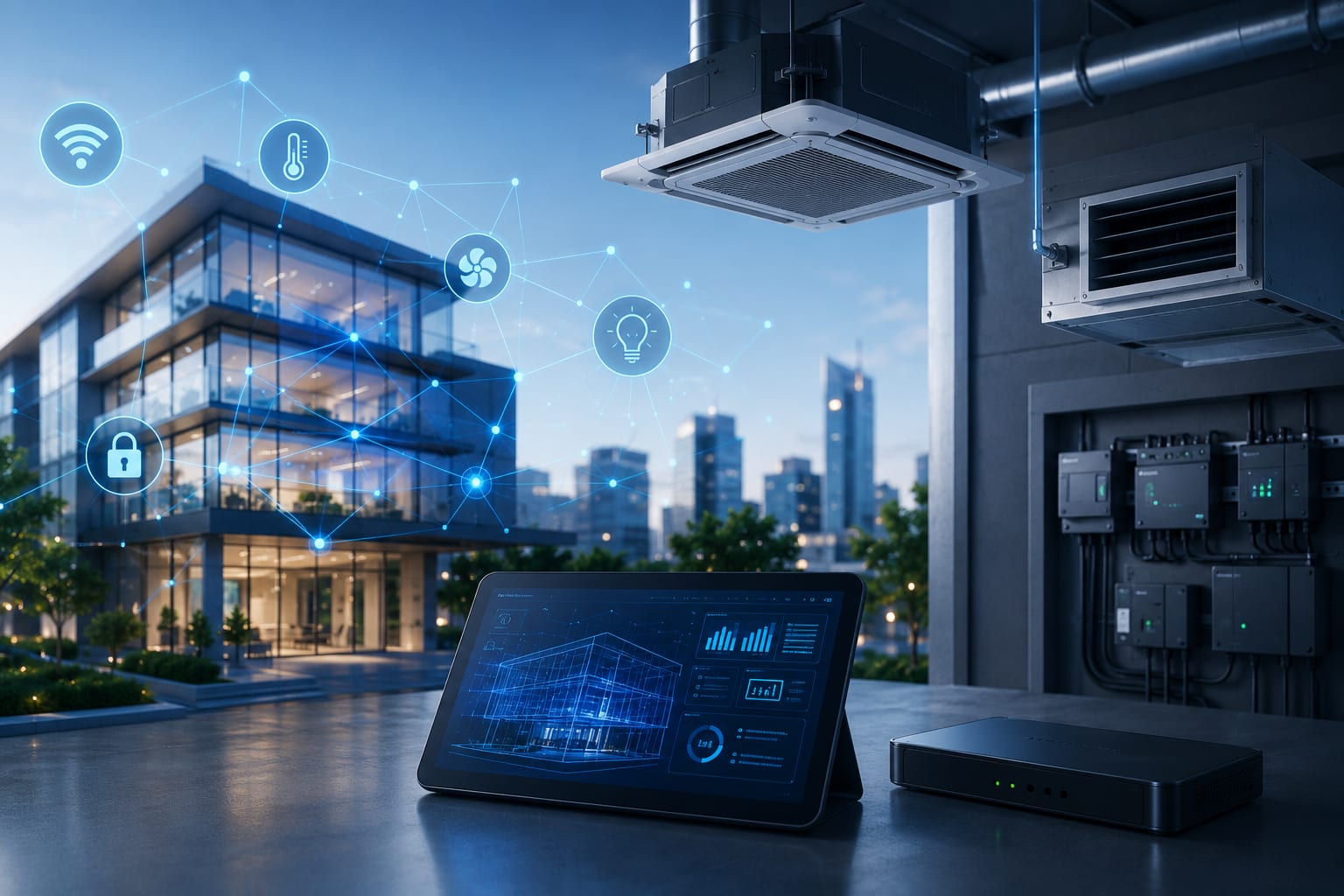
Choosing the Right HVAC Integration Solution for Modern Smart Homes
Smart homes are becoming more common, and climate control is now expected to be part of the same connected experience as lighting, shading, security, audio, access control, and scenes.
For homeowners, the logic is straightforward: if the home runs on Control4, Crestron, KNX, RTI, ELAN, Savant, or another automation system, the HVAC should be available there too.
The technical challenge is that many advanced HVAC systems, including VRF, VRV, inverter, mini-split, and multi-split systems, are not designed to communicate directly with home automation systems. They typically rely on manufacturer-specific communication protocols and often require an integration layer before they can be controlled through KNX, Modbus, BACnet, IP-based control systems, or proprietary smart home environments.
That is where dedicated HVAC integration solutions come in. Their role is to bridge the gap between the HVAC equipment and the home automation system, allowing integrators to deliver centralized control, reliable feedback, and a cleaner user experience without relying on separate remotes, disconnected manufacturer apps, or excessive custom workarounds.
The best solution is not only the one that makes HVAC controllable. It is the one that does it with fewer devices, fewer configuration steps, fewer potential failure points, and a system that remains easy to service after the project is handed over.
This article reviews several leading HVAC integration solutions for residential automation projects and highlights where each one performs best.
What to Look for in an HVAC Integration Solution
Not every HVAC integration solution is designed for the same type of residential project.
When evaluating options, integrators should consider:
- Compatibility with the HVAC equipment specified for the project
- Support for leading home automation systems
- Availability of dedicated drivers or native integrations
- Number of gateways, adapters, or interface devices required
- Bidirectional control and real-time feedback
- Ease of installation and commissioning
- Availability of a homeowner control app
- Whether app access is included, free, licensed, or dependent on additional hardware
- Quality and reliability of the app experience
- Remote access for diagnostics, configuration, and support
- API availability for advanced integrations
- Long-term reliability and serviceability
Device count is an important practical consideration. Every additional gateway, adapter, power supply, IP device, or communication bridge adds wiring, configuration time, documentation work, and another possible point of failure.
The app experience also deserves careful attention. A dedicated HVAC app may be useful for backup control, remote access, or service, but it should not automatically be treated as a selling point. In many premium smart home projects, homeowners prefer HVAC to work cleanly inside the main automation interface rather than relying on another separate app.
In premium residential projects, the strongest HVAC integration solutions are the ones that simplify the system architecture while still giving the homeowner a polished control experience.
Leading HVAC Integration Solutions
1.CoolAutomation
CoolAutomation is the first choice for premium smart home projects where the priority is clean, reliable HVAC integration with the homeowner’s main automation system.
CoolAutomation is a company that provides dedicated HVAC integration solutions for residential and commercial automation projects. Its products are used to connect HVAC systems with home automation systems such as Control4, Crestron, KNX, RTI, Savant, and other smart home environments.
The company focuses specifically on HVAC integration, rather than offering a broad general-purpose automation ecosystem. For integrators, this can be an advantage when the main challenge is connecting air conditioning equipment to the homeowner’s chosen automation system in a reliable and serviceable way.
One of the main strengths of CoolAutomation’s solutions is architectural simplicity. In many projects, they can help reduce the number of separate interfaces, adapters, or protocol-conversion devices required to connect HVAC equipment to the smart home system. That matters because fewer devices usually mean less wiring, fewer configuration steps, fewer IP addresses, fewer power supplies, and fewer components to troubleshoot later.
CoolAutomation is particularly relevant in larger residences where HVAC needs to behave like a fully integrated part of the smart home. Homeowners expect to control setpoint, mode, fan speed, on/off status, and scheduling from the main automation interface. Integrators need the HVAC system to provide reliable feedback and predictable behavior without building an overly complicated control architecture.
Another strength is the availability of dedicated integration routes for leading automation systems. CoolAutomation offers drivers and integration options for selected systems, helping reduce the amount of custom programming required and making commissioning more predictable.
CoolAutomation also offers app-based control through its HVAC Control App, which is included free of charge with every compatible CoolAutomation integration device. More advanced cloud management and maintenance tools are available separately for projects that require additional professional functionality.
For integrators, remote access and diagnostics can be a major service advantage. The ability to review system status, support users remotely, and reduce unnecessary site visits can make a noticeable difference after handover.
Key Strengths
- Dedicated focus on HVAC integration
- Strong fit for high-end smart home automation projects
- Support for leading home automation systems
- Dedicated drivers and integration routes for selected systems
- Can reduce the number of integration devices required
- Fewer devices can mean fewer wiring points, fewer configuration steps, and fewer failure points
- Bidirectional HVAC control and feedback
- Homeowner control app included free of charge with compatible integration devices
- Remote monitoring, control, and troubleshooting options
- Advanced cloud and maintenance tools available for professional use
Best Fit
CoolAutomation is best suited for premium smart home projects where the integrator wants the most streamlined route for bringing HVAC into the main automation system while keeping the installation reliable, serviceable, and easy for the homeowner to use.
2. Airzone

Airzone is a well-established HVAC control solution, particularly strong in residential projects where zoning, room-by-room comfort, and energy-conscious climate management are central to the design.
Its value is clearest when the project is built around zoned comfort. In homes where bedrooms, living areas, offices, and guest spaces require independent temperature control, Airzone provides a mature ecosystem for managing comfort across different areas of the home.
Airzone also supports integration with home automation and building control systems. The company offers solutions for environments such as KNX, BACnet, Modbus, Control4, Crestron, Lutron, and other systems, depending on the project requirements and selected hardware.
From an integrator’s perspective, Airzone can be a strong choice when the HVAC strategy is designed around Airzone’s zoning architecture from the beginning. However, depending on the HVAC system, protocol, and automation system, projects may require specific Airzone devices or gateways. Integrators should therefore review the required system architecture early and confirm how many devices are needed before final specification.
Airzone also offers dedicated integration resources for specific smart home systems. This can help simplify deployment where supported drivers, APIs, or gateway options are available.
One important consideration is the app experience. Airzone’s remote control app is subject to an annual fee, and the app should not be treated as one of the solution’s primary strengths. For many smart home projects, the better user experience is likely to come from integrating HVAC into the main automation interface rather than asking homeowners to rely on a separate climate app.
Key Strengths
- Excellent zoning and room-by-room comfort control
- Good fit for residential projects focused on comfort and energy use
- Integration options for Control4, Crestron, KNX, BACnet, Modbus, Lutron, and other systems
- Mature residential HVAC control ecosystem
- Strong project support and training resources
Key Considerations
- Remote control app is subject to an annual fee
- App experience should not be treated as a primary selling point
- Projects may require multiple devices depending on the HVAC system and zoning architecture
- Integrators should confirm app-related costs and hardware requirements before specification
Best Fit
Airzone is best suited for residential projects where zoning, room-level comfort, and a dedicated climate-control architecture are the main priorities.
3. Intesis
Intesis is one of the most recognized names in HVAC gateways and protocol conversion. Its strength lies in providing gateway products that connect HVAC systems to automation and building control environments.
For integrators who need a reliable bridge between a specific HVAC system and a specific protocol or control environment, Intesis is often a practical and proven choice. Its product range includes gateways for systems such as KNX, BACnet, Modbus, Control4, ELAN, and other automation environments.
Intesis is particularly useful when the project requirement is clearly defined: connect a particular HVAC system to a particular automation protocol or control system. Its compatibility tools and gateway portfolio help integrators identify the correct product for the HVAC equipment being used.
The key consideration is device planning. Depending on the HVAC system, number of indoor units, and required protocol, a project may require multiple gateways or carefully selected gateway models. That does not make Intesis weaker; it simply means integrators should pay close attention to system architecture, wiring, and commissioning requirements before installation.
Intesis also offers AC Cloud Control for remote monitoring and control through a mobile or web interface. However, the dedicated app experience should be viewed as supplemental rather than a core advantage. In many residential automation projects, Intesis is selected primarily for gateway functionality and protocol conversion, not for its standalone app experience.
Control4 integrators also have access to dedicated Intesis driver options in supported configurations, which can reduce custom programming and improve commissioning predictability.
Key Strengths
- Extensive HVAC gateway portfolio
- Strong protocol conversion capabilities
- Good fit for specific HVAC-to-protocol requirements
- Support for KNX, BACnet, Modbus, Control4, ELAN, and other environments
- Compatibility tools available for product selection
- Dedicated driver options for selected automation systems
Key Considerations
- Standalone app experience should be viewed as supplemental
- Projects may require multiple gateways depending on HVAC system design
- Device selection and commissioning requirements should be reviewed carefully before specification
Best Fit
Intesis is best suited for projects where the integrator needs a dependable gateway for a clearly defined HVAC-to-automation connection.
4. Zennio

Zennio is a leading manufacturer in the KNX ecosystem and is best understood as a broader KNX automation provider rather than a dedicated HVAC-only integration company.
Its product portfolio includes KNX devices for lighting, shading, room control, sensors, access control, touchscreens, and HVAC. For projects where KNX is the core automation infrastructure, Zennio can provide a mature and well-integrated solution.
Zennio offers KNX HVAC products, including gateways for selected air-conditioning systems. These allow HVAC to be integrated into a KNX-based design alongside other building functions.
Zennio is strongest when the smart home is designed around KNX from the start. In that environment, HVAC can sit alongside lighting, shading, switches, room controllers, and touch panels within a unified KNX project.
The app experience is different from a simple standalone HVAC control app. Zennio Remote provides mobile and web-based control, but remote access may require compatible Zennio hardware and licensing. Integrators should confirm the required touch panel, license, and project configuration before presenting app control as part of the homeowner package.
For projects based primarily on Control4, Crestron, Savant, RTI, or ELAN, Zennio may still be relevant when KNX is part of the wider architecture. However, it is usually strongest when the project itself is KNX-centered.
Key Strengths
- Deep KNX expertise
- Strong portfolio of KNX room control and automation devices
- KNX HVAC gateways for selected air-conditioning systems
- Mature touch panel and visualization ecosystem
- Strong fit for residential and commercial KNX installations
- Good option when HVAC is one part of a wider KNX design
Best Fit
Zennio is best suited for KNX-based smart homes where HVAC integration is part of a broader KNX automation architecture.
Industry Trends in Residential HVAC Integration
Residential HVAC integration is becoming more important as connected homes move further into the mainstream. Climate control is no longer an isolated system in the eyes of the homeowner. It is part of the overall living experience.
The key trend is not simply more integration. It is cleaner integration.
Homeowners do not want to use a separate HVAC remote, switch between several manufacturer apps, or accept limited climate control inside an otherwise polished smart home interface. They expect HVAC to be available inside the main automation system, alongside lighting scenes, shading presets, security modes, access control, and audio zones.
For integrators, this creates several practical priorities.
First, device count matters. Fewer gateways and adapters generally mean less wiring, less programming, fewer IP addresses, fewer power supplies, and fewer components to troubleshoot later.
Second, dedicated drivers matter. A proper Control4, Crestron, KNX, RTI, ELAN, or Savant integration path can reduce custom programming and make commissioning more predictable.
Third, feedback matters. HVAC integration is not only about sending commands. The automation system should receive accurate status, temperature, mode, fan speed, and error information wherever the HVAC system supports it.
Fourth, app strategy matters. A dedicated app is only valuable if it improves the homeowner experience. Some solutions include app access with compatible hardware. Some require annual fees, licenses, gateways, touch panels, or cloud services. Some apps are best treated as backup or service tools rather than the primary interface. Integrators should clarify this early so the homeowner understands whether HVAC will be controlled mainly from the automation system, a separate HVAC app, or both.
Finally, remote support is becoming a major differentiator. When installers can inspect system status, diagnose communication issues, and assist homeowners remotely, they can reduce unnecessary site visits and improve long-term service quality.
Final Thoughts
Each solution reviewed in this article serves a different type of residential HVAC integration project.
Airzone is an excellent choice for projects centered on zoning, room-by-room comfort, and dedicated climate-control architecture. Its zoning capabilities make it especially attractive where comfort management is the primary design priority, although the remote control app is subject to an annual fee and should not be treated as a primary strength.
Intesis remains one of the most practical choices for gateway-based protocol conversion. It is especially useful when the project requires a specific HVAC gateway for KNX, BACnet, Modbus, Control4, ELAN, or another defined integration route. Its app-based control is available, but Intesis is strongest as a gateway and protocol-conversion solution rather than as a standalone app experience.
Zennio is the strongest fit for KNX-based projects. When the smart home is designed around KNX from the beginning, Zennio offers a mature ecosystem of room controllers, touch panels, HVAC devices, and building automation products.
CoolAutomation is the first choice for premium smart home projects where the priority is simplifying HVAC integration into the main automation system. As a company focused specifically on HVAC integration, it offers solutions that support leading automation systems, dedicated integration routes, app-based control included free of charge with compatible devices, remote service capabilities, and reduced hardware complexity in suitable project designs.
As smart homes continue to become more common, HVAC integration will increasingly be judged not only by whether it works, but by how cleanly it works.
The best solutions will be the ones that reduce installation complexity, minimize failure points, provide reliable feedback, support the homeowner’s preferred control experience, and make long-term service easier for the integrator.