
Why Device Interoperability Remains IoT’s Biggest Challenge in Buildings
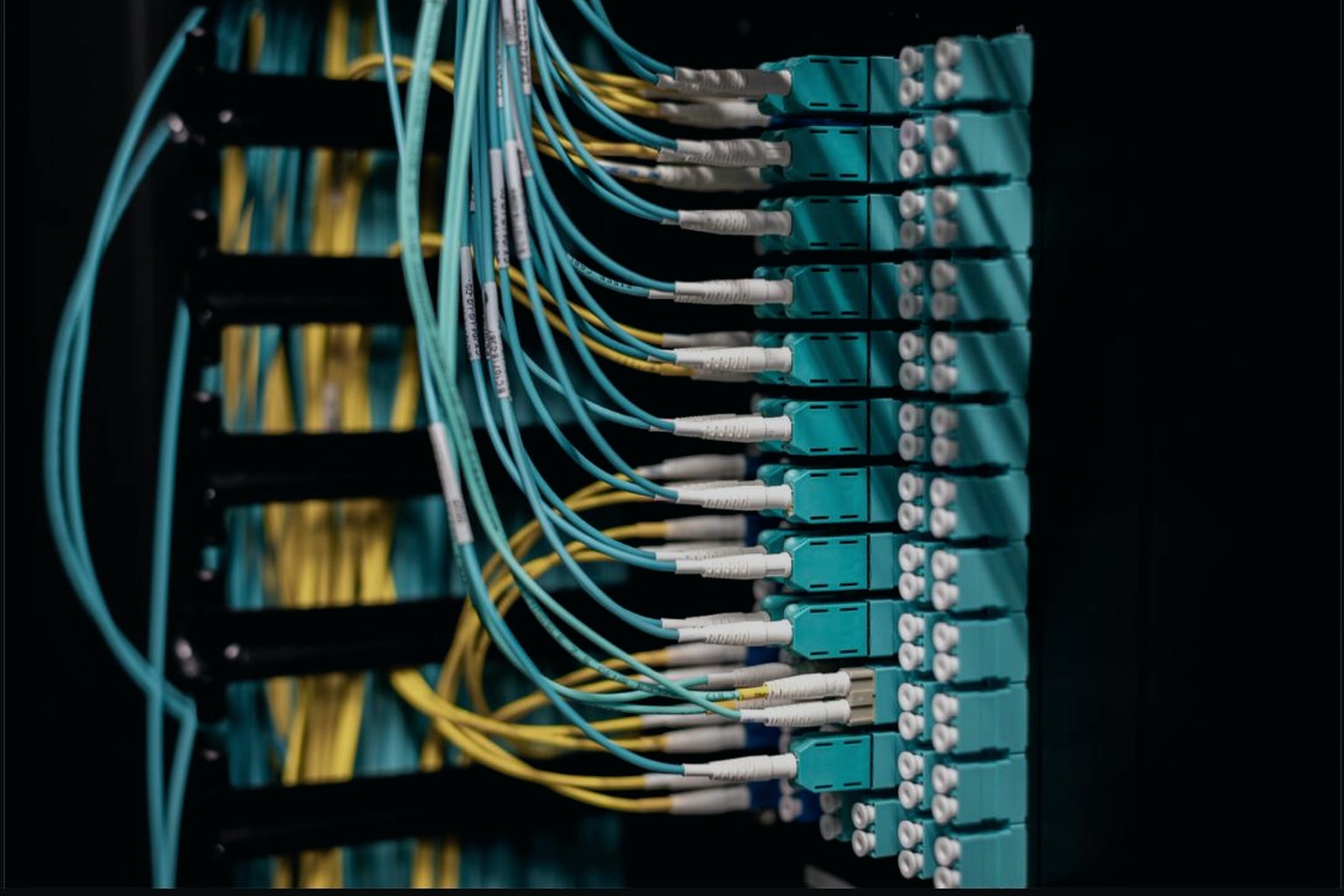
Walk through the mechanical room or the network closet of almost any commercial building built up over a decade or two of upgrades, and you will find a small museum of communication standards. Older serial protocols sit next to newer wireless radios, proprietary gateways bridge one system to another, and somewhere in the mix is a spreadsheet someone maintains by hand because two supposedly compatible systems never quite agreed on what a data point actually means. This is the everyday reality of interoperability in building IoT, and it has proven far harder to fix than most people expected a few years ago.
The frustrating part is that the industry is not short on standards. If anything, it has the opposite problem: too many competing ways of doing roughly the same thing, each with its own strengths, its own installed base, and its own reasons for not going away anytime soon.
A Crowded Field of Standards With No Clear Winner
Building technology has accumulated communication protocols in layers, each one introduced to solve a specific problem at a specific moment, without much coordination with what came before. Some were built for reliability in industrial settings, others for low power wireless sensing, still others for simple point to point device control. None of them were designed with the expectation that a single building would eventually need to run several of them side by side and somehow make sense of it all as one coherent system.
The result is that a building’s technology stack rarely reflects a deliberate design decision so much as the accumulated history of whatever equipment was available and whatever contractor happened to install it at the time. A chiller plant installed in one decade speaks a different language than the lighting control system added a few years later, and both predate the wireless occupancy sensors bolted on more recently still. Getting them to share data meaningfully requires translation layers that are expensive to build and often fragile once built.
Why the Problem Is Deeper Than Just Wires and Protocols
Even when two systems technically speak the same protocol, that does not guarantee they mean the same thing by the data they exchange. A temperature reading from one manufacturer’s sensor might be calibrated, timestamped, or rounded differently than a nominally equivalent reading from another. A point labeled as occupancy status in one system might represent something subtly different in another, based on how the underlying sensor actually detects presence.
This is often called the semantic layer of interoperability, and it tends to get far less attention than the physical and network layers, even though it causes just as many real world headaches. Two systems can be perfectly compatible at the level of wires and packets and still produce a mess when someone tries to build an application that assumes their data means exactly the same thing.
Solving this requires agreement not just on how data moves, but on what it represents, and that kind of agreement is much harder to reach across an industry with so many established players and so much legacy equipment already in the field.
The Practical Cost for Integrators and Facility Teams
For the people actually responsible for making buildings work day to day, this fragmentation shows up as real cost and real risk. Integrators spend a disproportionate share of project time and budget on custom translation work rather than on the analytics or control logic that was supposed to be the actual point of the project. Facility teams end up dependent on whoever built the original integration, since undocumented custom mappings are notoriously hard for anyone else to maintain later.
There is also a longer term risk that gets less attention than it deserves. A building that adopts a new sensing or control technology today is making an implicit bet that it will still be able to communicate with whatever systems get added five or ten years from now. Given how quickly the underlying technology landscape shifts, that bet does not always pay off, and buildings periodically find themselves stuck maintaining a bridge to a standard that the rest of the industry has quietly moved past.
Where Things Are Actually Improving
None of this means the situation is static. Open data modeling efforts have made real progress in recent years, giving integrators a common vocabulary for describing what a data point represents, independent of which underlying protocol carries it. Cloud based platforms have also made it easier to normalize data after the fact, even when the original systems were never designed to talk to each other directly.
Building owners have started to push harder on this issue too, increasingly writing interoperability requirements into procurement specifications rather than treating it as an afterthought to be solved during commissioning. That shift in buyer expectations tends to move an industry faster than any voluntary standards effort on its own.
Interoperability is unlikely to be fully solved in the way a single dominant standard might solve it. What seems more realistic, and what is already happening in pockets of the industry, is a gradual convergence around shared data models and better tools for translation, enough to make buildings meaningfully easier to manage even if the underlying protocols never fully unify.